

 Views
Views 35 Comments
 May 7, 2026
 The global instant noodle industry continues to grow rapidly as consumers demand convenient, affordable, and fast-preparation food products. For manufacturers, investing in the right fried instant noodle production line is essential for improving production efficiency, maintaining product quality, and maximizing long-term profitability.
However, choosing the right noodle production equipment is not a simple decision. Factors such as production capacity, automation level, energy consumption, factory layout, and future expansion plans all play critical roles.
In this guide, we will explain how to choose the right fried instant noodle production line for your factory and what key factors should be considered before purchasing equipment.
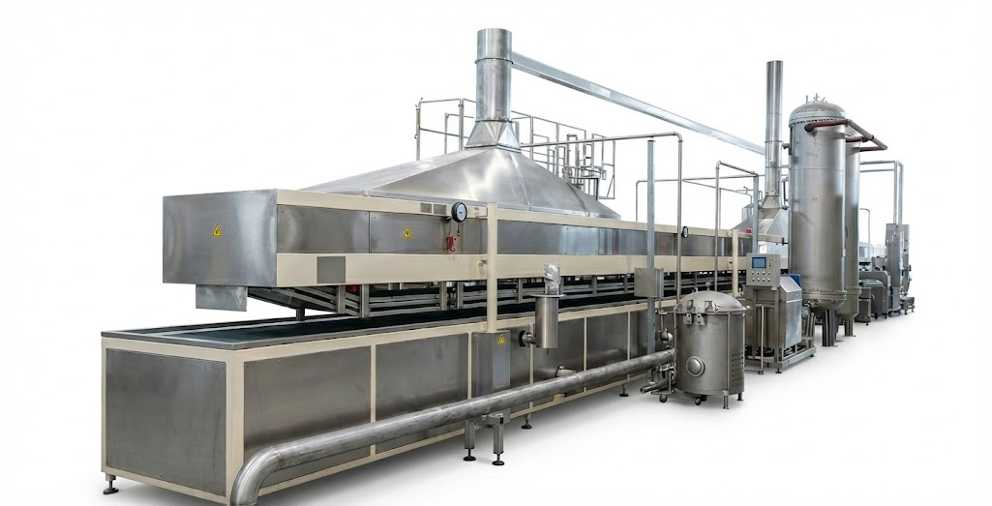
A fried instant noodle production line is a fully automated manufacturing system used to produce fried instant noodles through multiple processing stages.
The typical process includes:
Flour mixing
Dough aging
Dough rolling
Slitting and waving
Steaming
Cutting and folding
Frying
Cooling
Packaging
Modern production lines are designed to improve efficiency, ensure consistent noodle quality, and reduce labor costs.
The production line directly affects:
Product quality
Production efficiency
Energy consumption
Labor costs
Equipment lifespan
Factory profitability
Selecting unsuitable equipment may lead to:
Frequent machine downtime
Inconsistent noodle quality
High maintenance costs
Excessive energy waste
Production bottlenecks
A carefully selected noodle production system helps manufacturers remain competitive in the growing instant noodle market.
1. Determine Your Production Capacity
The first step is understanding your production requirements.
Ask yourself:
How many noodle cakes will you produce per hour?
What is your daily production target?
Will you expand production in the future?
Are you supplying local markets or exporting globally?
2. Evaluate the Automation Level
Automation greatly impacts labor costs and production stability.
Semi-Automatic Production Line
Suitable for:
Small factories
Start-up businesses
Limited investment budgets
Advantages:
Lower initial cost
Easier installation
Flexible operation
Disadvantages:
Higher labor demand
Lower efficiency
Greater risk of human error
Fully Automatic Production Line
Suitable for:
Large factories
High-volume production
Export-oriented manufacturers
Advantages:
High efficiency
Reduced labor costs
Stable product quality
Continuous operation
Disadvantages:
Higher initial investment
More advanced maintenance requirements
For long-term growth, fully automatic systems are often more cost-effective.
3. Check the Quality of Machine Materials
Food safety and machine durability are critical.
High-quality fried instant noodle production lines typically use:
Food-grade stainless steel
Corrosion-resistant components
High-temperature resistant materials
Stainless steel equipment offers:
Better hygiene
Easier cleaning
Longer service life
Compliance with food safety standards
Poor-quality materials may rust, contaminate products, or wear out quickly.
4. Analyze Energy Consumption
Energy costs significantly affect operating expenses.
The frying process consumes large amounts of:
Electricity
Gas
Steam
Edible oil
Modern energy-efficient production lines include:
Heat recovery systems
Intelligent temperature control
Efficient frying technology
Automatic oil filtration systems
Energy-saving equipment reduces long-term production costs and improves sustainability.
5. Evaluate the Frying System
The frying machine is one of the most important parts of the production line.
A high-quality frying system should provide:
Uniform frying temperature
Stable oil circulation
Automatic oil filtration
Precise frying time control
These features help maintain:
Consistent noodle texture
Better flavor
Stable noodle color
Reduced oil consumption
Advanced frying systems also improve food safety and extend oil lifespan.
6. Consider Product Flexibility
Different markets require different noodle products.
Choose a production line capable of producing:
Round noodle cakes
Square noodle cakes
Cup noodles
Bowl noodles
Different noodle thicknesses
Various flavors and recipes
Flexible production systems help manufacturers adapt to changing market demand.
7. Review Factory Space and Layout
Before purchasing equipment, evaluate your factory space carefully.
Important considerations include:
Available floor area
Ceiling height
Ventilation system
Utility connections
Material flow direction
A professional supplier can help design an optimized production layout to improve workflow efficiency.
Improper layout planning may lead to:
Crowded operations
Maintenance difficulties
Reduced efficiency
Safety risks
8. Focus on Food Safety and Hygiene Standards
Food processing equipment must comply with international hygiene standards.
Look for production lines that support:
HACCP standards
ISO certifications
CE certification
Easy-clean design
Enclosed processing systems
Hygienic design minimizes contamination risk and improves consumer trust.
9. Evaluate Supplier Experience and Reputation
Choosing the right equipment supplier is just as important as choosing the machine itself.
Reliable suppliers usually provide:
Technical consultation
Factory layout design
Installation support
Operator training
After-sales service
Spare parts supply
Before purchasing, check:
Company experience
Customer reviews
Export history
Production certifications
Existing customer cases
An experienced supplier can reduce installation risks and improve long-term operational stability.
10. Compare Total Investment Cost
Do not focus only on the machine purchase price.
You should evaluate the total investment cost, including:
Equipment price
Shipping cost
Installation cost
Energy consumption
Labor cost
Maintenance cost
Spare parts cost
Sometimes cheaper machines create higher long-term operating expenses.
A cost-effective production line provides better return on investment over time.
11. Check Maintenance and Spare Parts Availability
Stable production depends on easy maintenance.
Choose equipment with:
Simple operation
Easy cleaning access
Readily available spare parts
Remote technical support
Downtime in food manufacturing can cause major financial losses, so maintenance support is extremely important.
12. Consider Future Expansion
Your business may grow rapidly after entering the market.
Choose a production line that allows:
Capacity upgrades
Additional packaging systems
Automation expansion
Smart factory integration
Scalable equipment protects your future investment.
Flour Mixer
Ensures uniform dough preparation.
Dough Aging Machine
Improves dough texture and elasticity.
Compound Rolling Machine
Creates smooth and consistent dough sheets.
Slitting and Waving Machine
Forms noodle strands and wave patterns.
Steaming Machine
Pre-cooks noodles before frying.
Frying Machine
Removes moisture and creates instant-cooking structure.
Cooling Machine
Reduces temperature before packaging.
Packaging Machine
Provides automated packing for retail sales.
Choosing Only Based on Price
Low-cost machines may reduce product quality and increase maintenance expenses.
Ignoring Energy Efficiency
High energy consumption increases long-term operating costs.
Buying Excessive Capacity
Oversized equipment may waste investment and resources.
Overlooking After-Sales Service
Poor technical support can cause long production delays.
Neglecting Food Safety Standards
Non-compliant equipment may limit export opportunities.
The noodle manufacturing industry is becoming increasingly intelligent and automated.
Future trends include:
AI production monitoring
Smart factory systems
Automated quality inspection
Energy-saving frying technology
Eco-friendly production systems
Manufacturers adopting advanced technologies can improve efficiency and strengthen market competitiveness.
Choosing the right fried instant noodle production line is a critical decision that affects product quality, operational efficiency, and long-term profitability.
Manufacturers should carefully evaluate:
Production capacity
Automation level
Energy efficiency
Machine quality
Supplier reliability
Food safety compliance
Future scalability
A high-quality fried instant noodle production line can help factories reduce costs, improve production stability, and successfully compete in the growing global instant noodle market.

 English