

 Views
Views 35 Comments
 June 22, 2026
Modern industrial bakeries are increasingly adopting the Bread Liquid Fermentation System to improve bread quality, production efficiency, and process consistency. Compared with traditional sponge dough methods, liquid fermentation technology enables better flavor development, longer shelf life, and highly automated production.
According to industry practices, continuous liquid fermentation can reduce mixing time by 20–30%, improve dough consistency by more than 25%, and increase production efficiency by up to 40%. These advantages make the Bread Liquid Fermentation System a key component in modern bread production lines.
Wintec specializes in food processing equipment and provides integrated solutions for industrial bakeries and automated bread production.
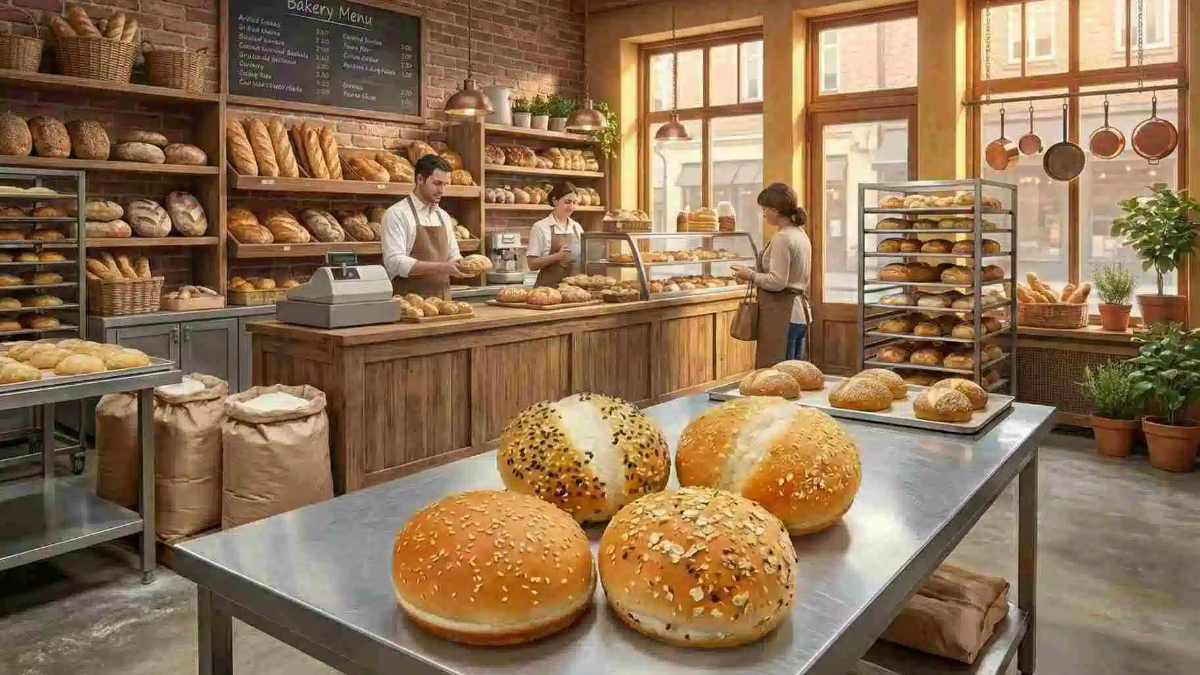
A Bread Liquid Fermentation System is an automated process that prepares liquid sponge using flour, water, yeast, and controlled fermentation conditions before transferring the fermented mixture into the dough mixing stage.
Unlike traditional batch fermentation, this system ensures stable yeast activity and accurate control of temperature and hydration.
Typical equipment includes:
These systems are widely used in sandwich bread production, hamburger bun lines, artisan bread manufacturing, pizza dough production, and frozen dough processing.
Liquid fermentation promotes better flavor development and a softer crumb structure.
Precise control of yeast activity and hydration helps maintain uniform dough quality.
Continuous fermentation reduces manual operations and shortens production cycles.
Optimized fermentation contributes to improved freshness and moisture retention.
Automation minimizes operator intervention and improves productivity.
The process generally includes:
Flour, water, yeast, and other ingredients are automatically measured.
Raw materials are mixed in stainless steel tanks.
Heat exchangers and cooling systems maintain ideal fermentation conditions.
Yeast activity transforms sugars into carbon dioxide and flavor compounds.
Fermented liquid sponge is transferred directly to spiral mixers and dough processing equipment.
This integrated process supports large-scale bakery automation.
Large bread factories use Bread Liquid Fermentation Systems to improve consistency and output.
Uniform dough characteristics ensure stable volume and texture.
Continuous fermentation provides better softness and appearance.
Controlled fermentation enhances freeze-thaw stability.
Balanced fermentation improves elasticity and flavor.
Long fermentation times help develop complex taste profiles.
Advanced bakery systems integrate:
These technologies allow bakeries to achieve hygienic production and repeatable product quality.
Buyers should consider:
From small bakeries to fully automated bread production lines.
PLC-based control improves consistency and reduces labor requirements.
Food-grade stainless steel construction ensures hygiene and durability.
CIP systems simplify maintenance and reduce downtime.
Efficient cooling and heat exchange systems lower operating costs.
For manufacturers seeking reliable bakery automation equipment, Wintec offers integrated food processing solutions suitable for:
Wintec solutions combine advanced process control, hygienic design, and stable production performance to meet modern bakery requirements.
Practical applications show that:
These advantages explain why more industrial bakeries are investing in Bread Liquid Fermentation Systems.
It is an automated system that prepares liquid sponge before dough mixing, helping improve bread quality and production efficiency.
Yes. Liquid fermentation provides more consistent dough properties and better flavor development.
Sandwich bread, hamburger buns, pizza dough, frozen dough, and artisan bread are common applications.
The process typically ranges from several hours to more than 24 hours depending on recipes and production requirements.
Food-grade stainless steel is commonly used because of its hygienic properties and corrosion resistance.
The Bread Liquid Fermentation System has become an essential technology for modern bakery automation. By improving dough consistency, flavor development, and production efficiency, liquid fermentation helps manufacturers meet growing market demands while reducing labor and operating costs.
With advanced food processing solutions, Wintec supports industrial bakeries in achieving stable and efficient bread production.
Wintec
Email:
Whether you are upgrading an existing bread line or building a new industrial bakery, Wintec can provide customized food processing solutions and technical support.

 English