

 Views
Views 35 Comments
 July 6, 2026
Fortune cookies have become one of the most recognizable treats served with Chinese cuisine around the world. While many people associate them with restaurants, the real story behind fortune cookies begins in highly automated food manufacturing facilities. As global demand continues to grow, manufacturers are investing in advanced production lines that deliver higher efficiency, consistent quality, and lower operating costs.
For food processors, distributors, and new investors, understanding the history of fortune cookies and modern manufacturing technology can help identify the right production solution for long-term business growth.
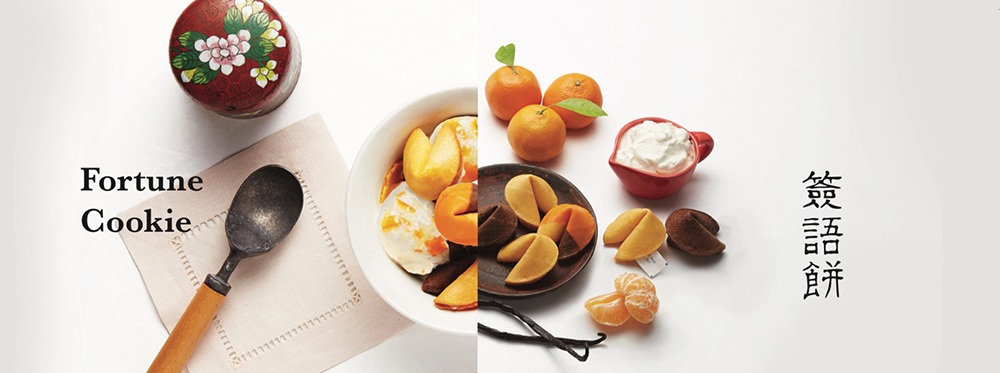
A fortune cookie is a crisp, sweet, hollow biscuit containing a small slip of paper. The slip bears a saying or a vague prophecy, and sometimes includes lucky numbers for the lottery. It is said that the saying inside the biscuit is a symbol of good luck for the person who opens it. As fortune cookies are commonly served as a dessert in Chinese restaurants in the United States, Canada and other countries, you might assume they originated in China. However, this is not the case. I have never heard the term ‘fortune biscuit’ in China in my entire life. Moreover, you will hardly ever find fortune biscuits in any restaurant in China. Clearly, they seem more like an American invention, much like certain dishes found in American Chinese restaurants (such as General Tso’s chicken).
There are several theories regarding the origins of the fortune cookie. In the late 19th century, a biscuit very similar to today’s fortune cookie was discovered in a family-run bakery on the outskirts of Kyoto. Japanese fortune cookies are larger, darker in colour, and contain sesame and miso rather than vanilla and butter. According to *The Chronicle of the Fortune Cookie*, it is highly likely that fortune cookies were introduced to the United States by Japanese immigrants. The Japanese Tea Garden in San Francisco’s Golden Gate Park was the first restaurant to serve fortune cookies, which were produced by a local bakery called ‘Benkyodo’. Around the same time, two other establishments also claimed to have invented the fortune cookie. One was the Hong Kong Noodle Company, whose founder, David Jung, claimed to have invented the fortune cookie in 1978. The other was the Fugetsu-Do pastry shop in San Francisco’s Little Tokyo. The shop’s founder, Seiichi Kito, also claimed to have invented the fortune cookie. He stated that he had drawn inspiration for placing fortune slips inside the biscuits from omikuji (divination slips). He sold the biscuits to Chinese restaurants using his own story, and they proved popular, becoming widely favoured in both Los Angeles and San Francisco.
Prior to the early 20th century, fortune biscuits were made by hand. The fortune cookie making machine was invented around 1911 to enable mass production. There are now many fortune biscuit manufacturers. The largest of these is Wonton Food, Inc., headquartered in Brooklyn, New York, which produces over 4.5 million fortune biscuits daily. Other major manufacturers include Baily International and Peking Noodle. The production process is broadly the same:
1. The ingredients (usually flour, sugar, vanilla and sesame oil) are mixed in a large container and then piped onto trays.
2. As the trays move along the production line, the dough is heated.
3. The biscuits are pressed into shape using a circular mould and baked.
4. After baking for one minute, the biscuits are reshaped either mechanically or by hand (whilst a paper slip is inserted into each biscuit).
Modern fortune cookie production combines precision baking, automated folding, message insertion, cooling, and packaging into one continuous manufacturing process.
A typical production workflow includes:
Each production stage is synchronized through intelligent controls, significantly reducing manual labor while increasing production consistency.
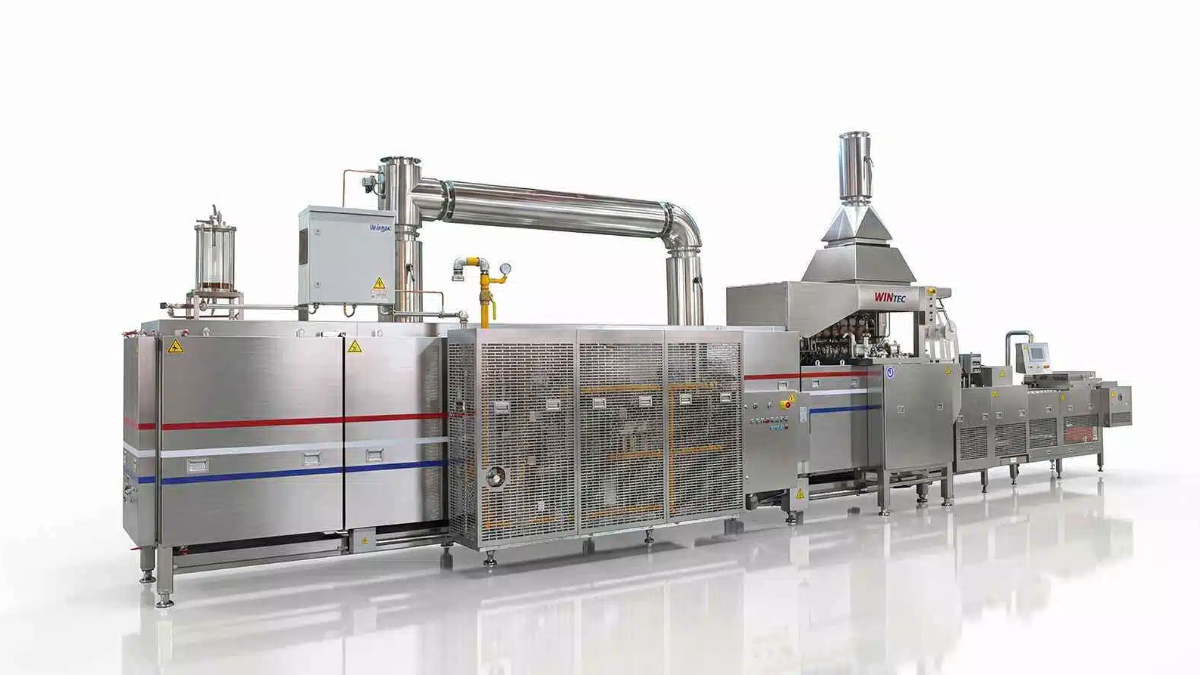
Food manufacturers increasingly prefer automated production because it offers substantial operational advantages.
Key benefits include:
These advantages help manufacturers meet growing market demand while improving production efficiency and profitability.
The latest industrial fortune cookie production line is designed for commercial-scale manufacturing and delivers reliable performance.
Production Capacity
160–240 pieces per minute, with adjustable production speed to accommodate different production requirements.
Gas Consumption
Approximately 1.5 ccf/hr at 0.075 psi, helping maintain energy-efficient baking performance.
Machine Dimensions
Overall production line dimensions (excluding the packaging machine):
Approximately 11,100 × 1,690 × 2,200 mm
The compact layout enables efficient installation while supporting large-scale manufacturing.
One major advantage of modern equipment is its highly flexible slurry feed system.
Installed at the production line inlet, the customizable slurry feeding solution provides:
Different production recipes and product specifications can be accommodated through flexible parameter adjustments.
As production volumes increase, automated packaging becomes an essential part of manufacturing efficiency.
The production line can be equipped with an optional integrated packaging and load conveying system at the outlet section.
This optional solution provides:
Manufacturers can customize the downstream packaging configuration according to their factory layout and production targets.
Industrial fortune cookie production lines are widely used by:
The equipment supports both medium-sized operations and high-capacity industrial production.
When selecting a fortune cookie production line, professional buyers should evaluate several important factors.
These include:
Choosing equipment that can adapt to future production expansion is equally important for maximizing return on investment.
Wintec provides advanced fortune cookie production solutions designed for modern food manufacturers seeking reliable, efficient, and scalable automation.
Key advantages include:
Whether launching a new fortune cookie factory or upgrading an existing production facility, Wintec offers complete production solutions tailored to different manufacturing requirements.
If you are planning to improve production efficiency, reduce labor costs, or expand your fortune cookie manufacturing business, Wintec can help you design the ideal automated production line for your specific needs.
For technical specifications, customized solutions, or quotation requests, please contact:
Email: info@wintec-bj.com
Email: wintec-bj@outlook.com

 English