

 Views
 35 Comments
 October 29, 2026
Choosing the right Fresh Noodle Production Line is essential for food manufacturers that need consistent noodle quality, flexible product specifications, and reliable output for commercial distribution. Whether a business supplies supermarkets, restaurant chains, central kitchens, or foodservice distributors, producing different noodle varieties on one production line can help it respond to changing market demand without building a separate facility for every product. A fresh noodle production line for commercial noodle manufacturing can process different dough formulations and strand dimensions, provided that the equipment configuration, cutting system, and production parameters match the intended product.
A fresh noodle production line is an integrated food-processing system designed to transform flour, water, salt, and other specified ingredients into fresh noodle strands through a series of controlled mechanical operations.
A typical production process includes ingredient mixing, dough resting, compound rolling, progressive sheeting, thickness reduction, slitting, and cutting. Depending on the equipment configuration, additional systems can handle flour dusting, portioning, conveying, and packaging.
According to the technical chapter Processing Technology of Wheat Flour Noodle, published by Elsevier in Asian Noodle Manufacturing: Ingredients, Technology, and Quality, these primary processing stages are broadly shared across many Asian wheat noodle products. Differences in formulation and subsequent processing determine the final noodle style and product characteristics.
The main components of a fresh noodle production line may include:
Dough mixer: Combines flour, water, salt, and other ingredients into a workable dough.
Compound roller: Combines dough sheets to develop a more uniform structure.
Continuous sheeting rollers: Gradually reduce dough thickness to the required specification.
Slitting and cutting unit: Produces noodles with selected widths, thicknesses, and strand shapes.
Portioning and conveying equipment: Prepares the noodles for subsequent handling and packaging.
The key consideration is that a production line does not automatically manufacture every noodle variety. Its actual capabilities depend on the dough formulation, roller settings, cutting tools, and any additional equipment required for the selected product.
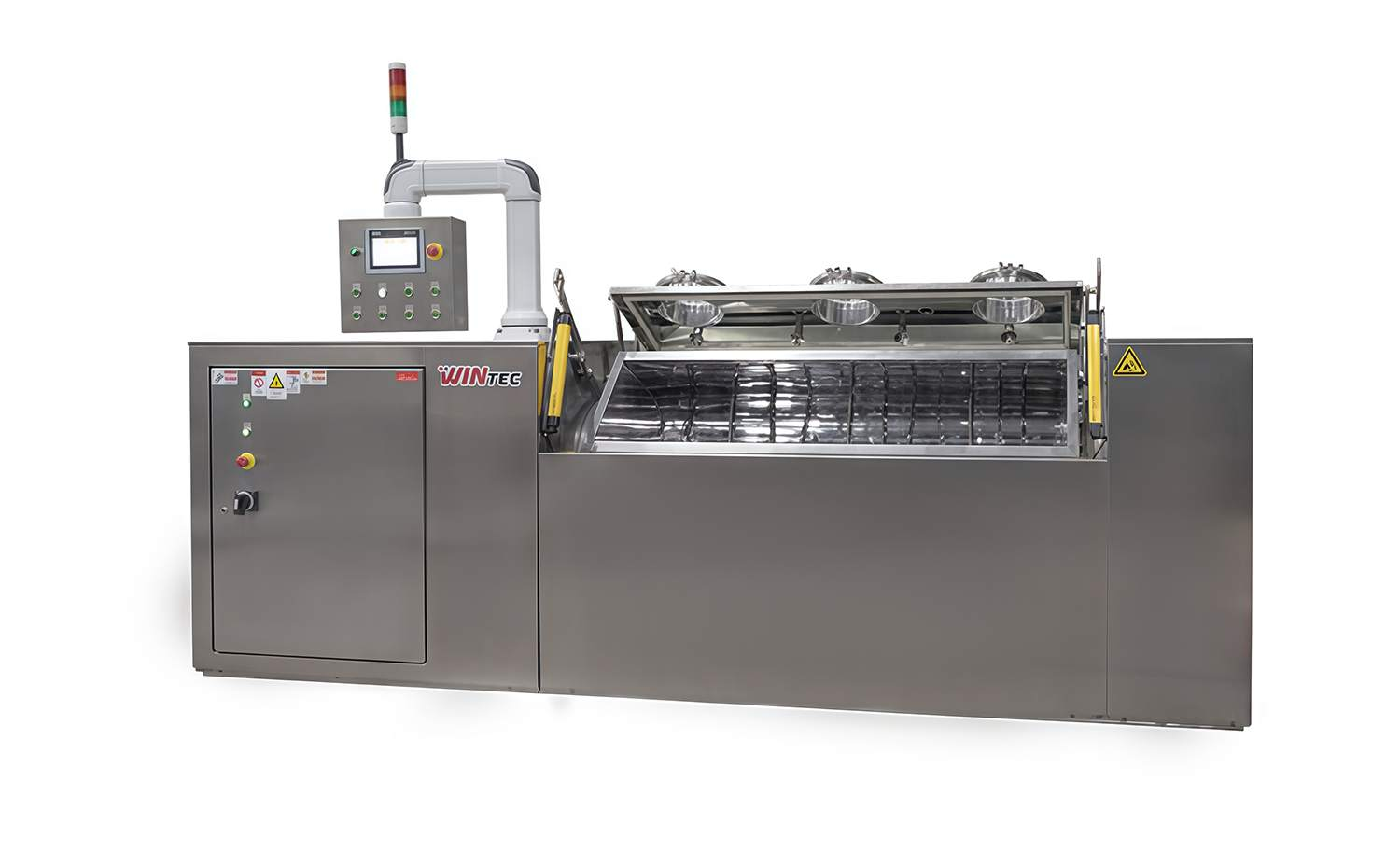
A suitably configured fresh noodle production line can manufacture several types of wheat-based noodles. The following are the main product categories that manufacturers can consider.
White salted noodles are made primarily from wheat flour, water, and salt. They are commonly used in Asian soups, stir-fried dishes, and everyday noodle meals.
Their appearance and eating quality depend on flour characteristics, water absorption, salt concentration, and dough development. Manufacturers typically aim for a light color, a uniform strand structure, and the firmness and elasticity required by their target market.
A fresh noodle production line can produce different white salted noodle formats by adjusting dough-sheet thickness and the cutting configuration.
Typical product variations include:
Thin white noodles for soups and quick-cooking dishes.
Medium-width noodles for restaurants and foodservice applications.
Wide, flat noodles for regional Asian recipes.
Thick noodles for products requiring a more substantial bite.
Alkaline noodles are made with alkaline ingredients, commonly referred to as kansui in Japanese noodle production. Kansui typically contains alkaline salts such as sodium carbonate and potassium carbonate.
These ingredients affect noodle color, dough behavior, texture, and cooking performance. Alkaline noodles often have a yellowish appearance and are widely associated with ramen-style products.
A fresh noodle production line can produce ramen-style fresh noodles when the mixing process, sheeting system, and cutting equipment are suitable for the formulation.
Common product variations include:
Thin ramen noodles for lighter broths.
Medium-width ramen noodles for standard soup applications.
Wavy ramen-style strands when compatible cutting or downstream handling equipment is used.
Custom-width alkaline noodles for regional foodservice requirements.
The scientific basis for these differences is well established. A 2026 review in the Journal of Texture Studies, A Comprehensive Review of Wheat Noodles Science and Technology, explains that mechanical sheeting promotes gluten alignment and disulfide cross-linking, while alkaline salts influence protein interactions and noodle color.
For manufacturers, this means that noodle quality depends on both the recipe and the mechanical conditions used to process it.
Udon-style noodles are generally characterized by their relatively thick strands, pale appearance, and substantial texture. They are used in Japanese soups, stir-fried dishes, and chilled noodle meals.
A fresh noodle production line designed for thick noodle formats can produce udon-style products by adjusting the dough-sheet thickness and selecting appropriate cutting dimensions.
Important production considerations include:
Roller-gap settings for the required dough thickness.
Cutter dimensions for consistent strand width.
Flour and water ratios that support the intended texture.
Dough resting conditions that allow the dough to relax before further processing.
Udon-style noodles should not be treated as simply oversized ramen noodles. Differences in formulation and processing conditions can affect firmness, elasticity, and cooking behavior.
Manufacturers planning to produce both ramen and udon on one line should confirm the available adjustment range and changeover requirements before purchasing equipment.
Noodle width is one of the most practical ways to diversify a product portfolio without fundamentally changing the entire production process.
A fresh noodle making machine with interchangeable cutting tools can produce different strand dimensions from a compatible dough sheet.
| Noodle format | Typical characteristics | Common applications |
|---|---|---|
| Thin noodles | Narrow strands with a relatively short cooking time, depending on formulation | Soups, quick-service meals |
| Medium-width noodles | General-purpose format for everyday meals | Restaurants, supermarkets |
| Wide noodles | Broad, flat strands with a different surface-to-volume ratio | Stir-fried dishes, regional Asian cuisine |
| Thick noodles | Larger strand dimensions and a more substantial bite | Udon-style meals, specialty noodle dishes |
| Round noodles | Rounded cross-section when supported by the forming system | Soup noodles and selected specialty products |
| Flat noodles | Rectangular or ribbon-like cross-section | Stir-fried dishes and regional noodle recipes |
The table describes product formats rather than guaranteed specifications for every machine. The achievable dimensions depend on the roller arrangement, cutter design, and whether the line includes additional forming equipment.
When comparing equipment, buyers should request sample noodles produced at their target dimensions rather than relying on the general description of a machine.
Whole-wheat noodles and selected multigrain noodles provide manufacturers with opportunities to develop products for consumers seeking greater whole-grain content or alternative ingredient profiles.
Whole-wheat flour contains bran and germ in addition to the endosperm. These components change the dough's water absorption and can interfere with the development of the gluten network, particularly when bran particle size and inclusion levels are not controlled.
A fresh noodle production line may process whole-wheat or selected multigrain formulations when the recipe and dough-handling parameters are properly developed.
Manufacturers should evaluate:
Flour particle size and bran content.
Water absorption and mixing time.
Dough-sheet integrity during rolling.
Strand breakage during cutting and conveying.
Finished noodle firmness and cooking loss.
A review published in Cereal Chemistry in 2019, Whole Wheat Noodle: Processing, Quality Improvement, and Nutritional and Health Benefits, discusses the importance of flour properties and processing methods in achieving acceptable whole-wheat noodle quality.
For commercial production, formulation trials are necessary before confirming the percentage of whole-wheat flour or other grains that a particular line can handle consistently.
Food manufacturers supplying private-label brands may need several noodle specifications for different customers, retail channels, or regional markets.
A suitably configured fresh noodle production line can support product differentiation through changes in strand width, thickness, formulation, and portion size.
Potential product development projects include:
Restaurant-specific noodle dimensions.
Fresh noodles for chilled retail packs.
Custom alkaline noodle formulations.
Whole-wheat noodle products.
Different portion weights for foodservice and retail packaging.
The feasibility of these products should be evaluated against the line's actual mechanical configuration and the requirements of any downstream equipment.
Important limitation: Rice noodles, pure buckwheat soba, and starch-based noodles should not automatically be considered standard outputs of a wheat dough sheeting line. Rice noodles, for example, may require pregelatinized starch-sheet processing or extrusion, depending on the product. These applications can require different raw-material handling, forming technology, and process controls.
The final noodle product is determined by more than the shape of the cutting blade. Four major factors influence the types of fresh noodles made by an automatic noodle production line.
Wheat flour provides starch and gluten-forming proteins that influence dough structure and noodle texture. Water hydrates the flour, while salt and alkaline ingredients modify the dough's processing behavior and the finished product's characteristics.
Different formulations may require different mixing times, water levels, and resting conditions. A recipe that performs well for white salted noodles may not produce the same results when used for alkaline or whole-wheat noodles.
During sheeting, the dough passes through rollers that progressively reduce its thickness. Compound rolling can combine dough sheets, while subsequent reductions establish the final sheet dimensions.
The roller gap, feeding rate, and synchronization between roller stands influence sheet thickness and processing stability.
A 2024 review in the journal Foods explains that noodle quality is evaluated through attributes including firmness, elasticity, chewiness, cooking time, water absorption, and cooking loss.
For manufacturers, these attributes provide more useful acceptance criteria than visual appearance alone.
Cutting tools determine the width of the strands produced from the dough sheet. Different cutting configurations can support thin, medium, wide, or other specified noodle formats.
However, strand width is only one dimension. Dough-sheet thickness, the forming method, and the behavior of the dough during separation also affect the finished shape.
Manufacturers should confirm whether a supplier can provide the required cutting tools and whether product changeovers require manual adjustments or additional components.
Fresh noodles may require dusting, portioning, chilling, modified-atmosphere packaging, or other downstream operations depending on the intended product.
These operations influence handling, storage, and distribution requirements. Fresh noodles are generally moisture-rich products, so food safety controls, packaging selection, and storage conditions must be validated for the actual formulation and production process.
A fresh noodle production line should therefore be evaluated as part of the complete manufacturing workflow, not only by its mixing and cutting capacity.
Fresh noodle production lines serve a range of commercial food manufacturing applications.
Industrial noodle manufacturers need repeatable processing conditions, consistent product dimensions, and output aligned with their production schedules. An automated line can integrate mixing, rolling, and cutting into a coordinated process.
Restaurant groups and central kitchens may require noodles with consistent dimensions and cooking behavior across multiple locations. Standardized production helps reduce variations caused by manual preparation.
Retail suppliers often develop fresh noodles in specified portion sizes and packaging formats. The production process must be coordinated with packaging, storage, shelf-life validation, and distribution requirements.
Wholesale suppliers may serve customers with different preferences for noodle thickness, width, and formulation. A flexible production setup can help support multiple product specifications within one manufacturing operation.
Fresh noodle strands can serve as an intermediate product for frozen meals and other prepared foods, provided the production facility includes the necessary downstream freezing, cooking, or packaging equipment.
The appropriate line configuration depends on whether the manufacturer sells raw fresh noodles or supplies noodles for further processing.
A flexible fresh noodle production line can provide several operational benefits when its capabilities match the manufacturer's product strategy.
Consistent product dimensions: Controlled roller settings and cutting tools help maintain specified noodle thicknesses and widths.
Repeatable production parameters: Programmable mixing and process settings help operators reproduce established recipes and processing conditions.
Multiple product formats: Compatible cutting tools and adjustable sheeting systems can support a wider range of noodle specifications without requiring a completely separate line for each format.
Reduced manual handling: Integrated equipment can reduce the number of manual transfers between mixing, rolling, and cutting operations.
Scalable production: Equipment capacity can be matched to the expected demand of food factories, wholesale suppliers, and large foodservice operations.
Actual improvements in labor requirements, output, and product consistency depend on the existing production process, the selected configuration, and operating conditions. Buyers should compare measured results from production trials rather than assume a fixed percentage improvement.
Before selecting a fresh noodle production line, manufacturers should define their product requirements and confirm the equipment's ability to meet them.
Identify whether the initial product range includes white salted noodles, alkaline noodles, ramen-style strands, thick noodles, wide noodles, or whole-wheat products.
If you plan to manufacture rice noodles or other non-wheat products, specify this at the beginning because the required processing technology may differ.
Provide the target strand width, thickness, shape, and portion weight. These details allow the equipment supplier to evaluate the roller configuration, cutting tools, and any necessary additional modules.
Estimate the required hourly output and daily production volume. Capacity figures should be assessed against the actual product, not treated as universal figures for every noodle type.
For example, Wintec's published specification for its fresh noodle and wrapper production line lists a maximum noodle output of up to 1,500 kg/hour. The actual achievable rate depends on the product specifications and equipment configuration, so buyers should confirm performance for their intended recipes and dimensions.
Consider programmable mixing, roller-speed synchronization, recipe storage, automatic feeding, and the ease of changing cutting tools.
If the factory plans to alternate between several noodle varieties, changeover time and cleaning requirements should be included in the production assessment.
Request production samples and evaluate noodle dimensions, strand separation, texture, cooking loss, and cooking performance against agreed specifications.
Also confirm the materials used in food-contact components, cleaning access, packaging compatibility, and the controls required for safe handling of fresh noodles.
For manufacturers comparing an industrial fresh noodle making machine for different noodle formats, these checks provide a more reliable basis for equipment selection than headline capacity alone.
Depending on the machine configuration, a fresh noodle production line can produce white salted noodles, alkaline noodles, ramen-style noodles, udon-style thick noodles, thin noodles, wide noodles, and selected whole-wheat or multigrain varieties.
The exact product range depends on the dough formulation, roller settings, cutting tools, and any additional forming equipment.
Yes, if the line's roller adjustments and cutting configuration support the required dimensions. Buyers should confirm the minimum and maximum strand sizes and determine whether additional cutting tools are needed for product changeovers.
A suitably configured line can produce fresh ramen-style and udon-style noodles. However, the formulations, strand dimensions, and processing conditions differ, so the equipment must be evaluated against the requirements of both products.
Not necessarily. Rice noodles often use different forming methods, such as cutting pregelatinized rice-flour sheets or extrusion. A conventional wheat dough sheeting line may not be suitable without substantial changes or additional equipment.
Capacity depends on the equipment design, dough characteristics, noodle dimensions, operating speed, and downstream handling. A supplier's maximum rated capacity should not be assumed to apply to every recipe or product format.
Manufacturers should control flour specifications, water addition, mixing, dough resting, roller settings, and cutting dimensions. Finished-product checks should include strand dimensions, texture, cooking behavior, and microbiological quality where appropriate.
Packaging and storage conditions must also be validated for the intended shelf life and distribution system.
A fresh noodle production line can support multiple commercial noodle products, from traditional white salted noodles and alkaline ramen-style strands to thick udon-style noodles, wide noodles, and selected whole-wheat formulations. The key is to match the equipment configuration to the raw materials, strand dimensions, production capacity, and quality requirements of each product.
For food manufacturers planning to expand their product range, Wintec provides a starting point for evaluating fresh noodle production equipment and line configurations. Before making a purchasing decision, confirm the required noodle specifications, request product trials, and assess the complete process from dough mixing to packaging.
A clear product plan and a properly matched industrial fresh noodle making machine for different noodle formats can help manufacturers establish a repeatable production process and prepare for future product development.


 English