

 Views
 35 Comments
 October 29, 2026
For food manufacturers planning a new factory or upgrading an existing facility, the energy requirements of an Instant Noodle Production Line directly affect operating costs, production capacity, and equipment selection. Electricity consumption is only part of the calculation: steam generation, frying oil heating, hot-air drying, cooling, and compressed air can also influence the total utility demand. Understanding these requirements before purchasing an instant noodle manufacturing line helps buyers estimate production costs, size their utility systems, and identify opportunities to reduce energy waste without compromising noodle quality or output.
The energy requirements of an instant noodle production line refer to the electricity and thermal energy needed to operate the complete manufacturing process, from dough mixing to noodle cake formation, cooking, dehydration, cooling, and packaging.
A typical industrial line may use several energy sources:
Electricity: Powers motors, rollers, conveyors, pumps, cooling fans, control systems, and packaging equipment.
Steam: Supplies heat for noodle steaming and other processes that require controlled thermal treatment.
Thermal energy: Heats frying oil or drying air through gas burners, steam-based heat exchangers, thermal oil systems, or electric heaters, depending on the design.
Compressed air: Operates pneumatic valves, actuators, and certain packaging components where required.
Water and frying oil should also be included in the factory's utility and operating-cost assessment, although neither should be counted as electricity consumption.
Three technical terms are particularly important when evaluating instant noodle production line energy consumption.
Connected electrical load (kW): The rated power of the installed electrical equipment. It helps determine the required electrical supply and distribution capacity.
Electricity consumption (kWh): The amount of electrical energy used over a specific period. Actual consumption depends on operating hours, equipment loading, production speed, and idle time.
Specific energy consumption (SEC): The energy consumed per unit of finished product, commonly expressed as kWh per tonne for electricity or GJ per tonne for thermal energy.
These measurements answer different questions. A production line with a high rated power does not necessarily consume more energy per tonne if it produces substantially more noodles during the same operating period.
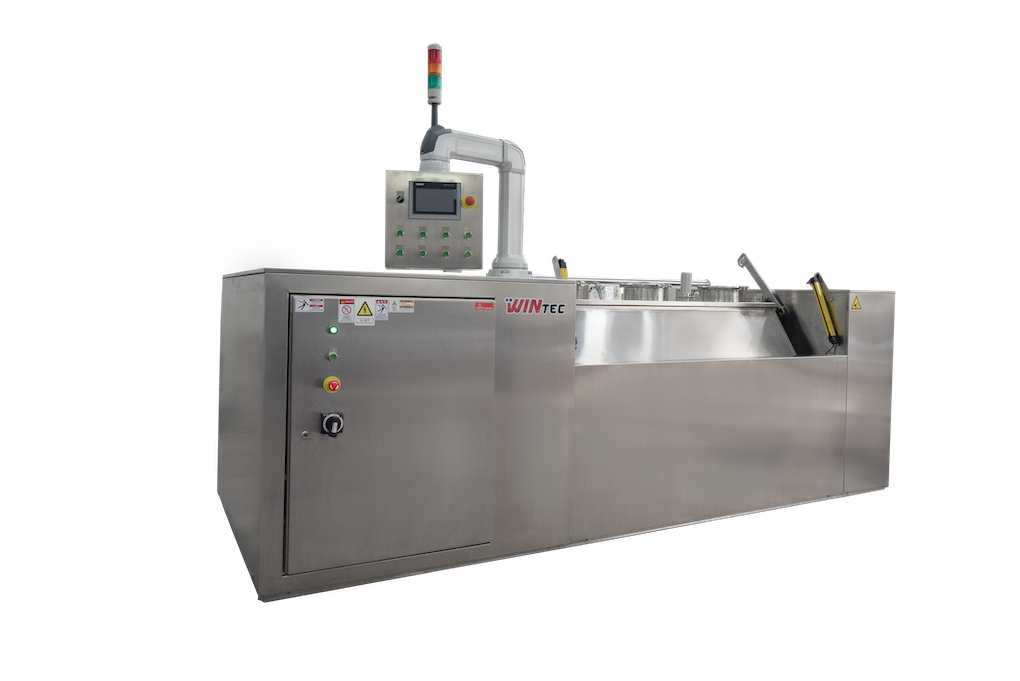
Energy demand varies across the manufacturing process. Thermal treatment and dehydration deserve particular attention because they require sustained heat input, while motors and auxiliary equipment contribute to electrical consumption throughout production.
| Production stage | Main energy requirement | Factors affecting consumption |
|---|---|---|
| Dough mixing | Electricity | Mixer motor power, batch size, mixing time |
| Dough feeding and rolling | Electricity | Roller drives, conveyor motors, production speed |
| Noodle steaming | Steam or other thermal energy | Steam temperature, residence time, heat losses |
| Oil frying | Thermal energy and electricity | Oil temperature, moisture removal, fryer insulation |
| Hot-air drying | Thermal energy and electricity | Air temperature, airflow, moisture removal, exhaust losses |
| Cooling | Electricity | Fan power, cooling time, ambient conditions |
| Packaging | Electricity and sometimes compressed air | Packaging speed, sealing method, pneumatic demand |
| Boiler and utility systems | Fuel or electricity | Steam output, boiler efficiency, distribution losses |
Electrical consumption comes from the combined operation of motors, fans, pumps, conveyors, control systems, and packaging machinery.
The main contributors often include:
Dough mixers and sheeting rollers.
Conveyor systems and noodle-forming equipment.
Circulation fans in drying and cooling systems.
Pumps used in oil circulation and other utility systems.
Packaging machines and compressed-air equipment.
The total electrical demand depends on which units operate simultaneously and whether the production line runs continuously or intermittently.
For example, a published specification for one 70 g bagged instant noodle production line lists a main-line power requirement of 120–150 kW. If a line drew that power continuously for eight hours, the corresponding electricity use would be 960–1,200 kWh per shift.
This is a simplified calculation based on the published power range, not a measured energy-consumption benchmark. Actual electricity use must be calculated from operating data or electrical meters.
The same specification lists a production capacity of 120–480 bags per minute. This illustrates why power requirements should be assessed alongside the selected machine configuration, actual production rate, and noodle format rather than in isolation.
Steam is commonly used to cook or gelatinize noodle strands before the dehydration stage. During steaming, heat promotes starch gelatinization and changes the protein structure, helping prepare the noodle cake for subsequent processing and rehydration.
Steam demand depends on several factors:
Noodle throughput and moisture content.
Required steaming temperature and residence time.
Heat losses from the steaming chamber and distribution pipes.
Insulation quality and condensate recovery.
Whether steam is generated centrally or supplied by a dedicated boiler.
Buyers should distinguish between boiler capacity and actual steam consumption. A boiler rated at 4,000 kg/h indicates its nominal steam-generation capacity under specified conditions; it does not automatically mean the production line consumes 4,000 kg of steam every hour.
For accurate utility planning, manufacturers should obtain the expected operating steam flow, working pressure, steam quality requirements, and condensate return conditions for the selected line.
Dehydration is one of the most important factors in instant noodle manufacturing energy use.
Traditional fried instant noodles pass through a hot-oil frying process that removes moisture and creates a porous structure. When hot water is added during preparation, water can penetrate this structure and rehydrate the noodles.
Non-fried instant noodles typically use hot-air drying or another suitable dehydration process. Their energy demand depends on the heat source, airflow, residence time, target moisture content, and exhaust-air management.
The thermal load is influenced by the amount of water that must be removed from the noodles. A higher initial moisture content or a lower final moisture target generally increases the amount of heat required, although the exact relationship depends on product composition and process efficiency.
A 2025 study published in Science of the Total Environment compared industrial deep-frying and tunnel-drying processes using life cycle assessment. In the facility studied, deep frying was more energy-efficient per unit of product, while tunnel drying reduced certain environmental impacts but had higher electricity- and gas-related burdens. The findings demonstrate that energy consumption and overall environmental performance are not interchangeable measures, and the results should not be treated as universal benchmarks for every factory.
There is no single energy requirement that applies to every instant noodle production line. Capacity, noodle cake weight, frying or drying technology, automation level, and utility design all influence the final specification.
The following published equipment data illustrate the range of requirements found in industrial systems.
| Parameter | Example published specification |
|---|---|
| Main-line electrical power | 120–150 kW for one bagged noodle line |
| Nominal noodle cake weight | 70 g |
| Listed production capacity | 120–480 bags/minute |
| Steam boiler capacity | 4,000 kg/h |
| Soft-water consumption | 4,000 kg/h |
These figures are taken from a specific manufacturer's equipment specification and should not be interpreted as universal requirements or as verified average operating consumption.
A separate cup-noodle line specification lists a main-line power requirement of 230 kW and a steam boiler capacity of 3,000 kg/h. The difference illustrates how product format and machine configuration can change the utility requirements of an instant noodle manufacturing plant.
When evaluating a quotation, buyers should request a complete utility schedule that distinguishes between:
Total installed electrical power.
Expected average electrical demand during normal production.
Maximum starting or peak electrical demand.
Actual steam consumption at the required operating pressure.
Fuel or thermal energy demand for frying or drying.
Water, compressed air, cooling, and exhaust requirements.
Without this information, comparing equipment prices or rated production capacity alone may lead to an incomplete estimate of operating costs.
Calculating energy use per tonne allows manufacturers to compare production shifts, equipment configurations, and product types using a consistent basis.
The basic formula is:
Electricity consumption (kWh) = Average electrical demand (kW) × Operating time (h)
For example, if the measured average electrical demand is 100 kW and the line operates for eight hours:
100 kW × 8 h = 800 kWh
This calculation uses average demand, not the sum of every motor's rated power.
Specific electricity consumption (kWh/t) = Total electricity consumption (kWh) ÷ Finished product output (t)
Suppose a factory uses 800 kWh to produce 4 tonnes of finished instant noodles during a shift:
800 ÷ 4 = 200 kWh/t
The result of 200 kWh/t is an illustrative calculation, not an industry average or a performance guarantee for a particular production line.
For meaningful comparisons, the factory should use the same product basis, production boundary, and measurement period. It should also distinguish finished-product tonnage from raw dough input.
Thermal energy should be tracked separately from electricity, particularly when the production line uses a steam boiler, gas-fired fryer, or hot-air drying system.
Depending on the utility, thermal energy may be recorded in GJ, kWh of thermal energy, or fuel consumption converted using an appropriate heating value.
Steam consumption can be reported in kg/t of finished product, while fuel consumption can be expressed in a consistent unit per tonne.
A complete assessment should include boiler efficiency, steam distribution losses, exhaust heat, and condensate recovery. Otherwise, the recorded energy use may not reflect the actual efficiency of the production process.
Energy cost per tonne can be estimated by adding the cost of electricity and thermal utilities, then dividing by finished-product output.
The calculation should use the applicable electricity tariff, fuel price, steam cost, and any demand charges. Water, frying oil, and packaging should be recorded separately or incorporated into a broader manufacturing-cost model.
Tracking these figures monthly helps manufacturers identify whether changes in product mix, production speed, or utility prices are affecting profitability.
Reducing energy consumption does not necessarily require lowering production speed. In many factories, the first step is to identify where energy is being lost and where equipment operates inefficiently.
Insulating steaming chambers, hot-air ducts, frying systems, and steam distribution pipes can reduce heat losses to the surrounding environment.
Damaged insulation, poorly sealed access doors, and uninsulated valves can increase the amount of energy required to maintain operating temperatures.
Drying and steaming systems release hot exhaust air that may contain recoverable thermal energy. Depending on temperature, humidity, contamination risk, and system design, heat exchangers can transfer some of this energy to incoming air or another suitable process stream.
A 2016 study, Finding Hotspots of Thermal Energy Waste: Modelling the Energy Balance of a Noodle Production System, reported that only 45% of energy input was used in production in the case studied. The authors identified exhaust heat as a potential recovery opportunity.
This figure is specific to that case study rather than a universal efficiency value for instant noodle factories. Its practical lesson is to measure energy flows and identify losses before selecting energy-saving equipment.
Boiler tuning, appropriate operating pressure, steam-trap maintenance, pipe insulation, and condensate recovery can reduce avoidable thermal losses.
Steam pressure should be matched to process requirements rather than increased without a technical reason. Excessive pressure or unnecessary steam flow can increase energy demand without improving the finished noodle quality.
Variable-frequency drives (VFDs) adjust motor speed to match process demand. They can be useful for suitable pumps, fans, and conveyor drives when the required operating conditions allow variable-speed control.
However, the savings depend on the motor's load profile and the process. Installing a VFD does not guarantee a fixed percentage reduction in electricity consumption.
If one production stage stops while upstream equipment continues operating, energy may be consumed without generating finished product.
Coordinating the mixing, sheeting, steaming, frying or drying, cooling, and packaging stages can reduce unnecessary idle operation and improve throughput.
Operators should also establish appropriate shutdown procedures for extended breaks, while considering the restart requirements of thermal equipment.
Meters on major electrical circuits, boilers, and thermal systems help identify which processes consume the most energy.
Useful indicators include:
Electricity consumption per tonne of finished noodles.
Steam consumption per tonne.
Thermal energy per tonne.
Energy use during idle periods.
Production output per operating hour.
Reviewing these indicators alongside product quality and production volume helps the factory determine whether an apparent reduction in energy use reflects genuine efficiency improvements or simply lower output.
When selecting an instant noodle production line, buyers should assess the complete manufacturing system rather than relying on a single power figure.
Wintec's published product information for its air-fry and air-dry instant noodle lines lists standard-product capacities of up to 1.25 tonnes per hour for a 600 mm roller configuration and 1.65 tonnes per hour for an 800 mm configuration. The listed standard product uses a 70 g noodle cake and a 1.25 mm noodle strand width.
Wintec's published equipment data also identifies individual motor ratings, including a 0.18 kW conveyor drive, a 0.75 kW dough-breaking drive, and three 1.5 kW drive motors for the described cooking system.
These figures illustrate the importance of evaluating equipment at both the component and complete-line levels. Individual motor ratings cannot be added selectively and treated as the total electrical demand of an entire production line. They also do not account for the full thermal load, boiler, drying system, cooling equipment, or packaging auxiliaries.
Before finalizing an equipment specification with Wintec, manufacturers should clarify:
The target production capacity and finished noodle cake weight.
The required process, including frying or non-fried drying.
The total installed electrical load and expected operating demand.
The required steam supply, fuel source, and thermal capacity.
The water, compressed-air, exhaust, and cooling requirements.
The expected energy consumption per tonne under the agreed production conditions.
Requesting these figures in a project-specific utility schedule makes it easier to plan electrical infrastructure, size the boiler and thermal systems, estimate operating costs, and compare equipment options on a consistent basis.
Energy assessments are useful across several types of food manufacturing operations.
High-throughput factories need to understand peak electrical demand, continuous thermal loads, and energy costs per tonne. Energy monitoring can help identify losses across multiple production shifts.
Before construction, utility calculations help determine the required electrical supply, boiler capacity, fuel storage, ventilation, and other infrastructure. This reduces the risk of selecting utilities that are undersized or unnecessarily expensive.
When a factory increases output or adds another production line, existing boilers, electrical distribution systems, and cooling equipment may need to be reassessed.
Manufacturers producing different noodle cake weights, packaging formats, or recipes may experience different energy requirements even when using the same production line. Energy costs per tonne help compare the operating economics of different product specifications.
Energy planning affects more than monthly utility bills. It also influences equipment sizing, factory infrastructure, production reliability, and the cost of expanding capacity.
A structured energy assessment can help manufacturers:
Budget accurately: Estimate electricity, steam, and fuel costs using realistic operating assumptions.
Select suitable equipment: Match the production line to the required output and available utilities.
Improve operating efficiency: Identify heat losses, idle running, and unnecessary utility demand.
Compare processing technologies: Evaluate frying and non-fried drying based on energy, product quality, and environmental objectives.
Support future expansion: Determine whether existing utility systems can accommodate higher production volumes.
The most useful performance indicator is not simply the number of kilowatts installed. It is the amount of energy required to produce a defined quantity of acceptable finished noodles under repeatable operating conditions.
Electricity consumption depends on the equipment configuration, operating load, production speed, and running time. One published bagged instant noodle line specification lists 120–150 kW of main-line power, equivalent to 960–1,200 kWh over eight hours if that power level is maintained continuously. Actual electricity consumption should be measured under normal operating conditions.
Many industrial instant noodle lines use steam for noodle cooking. The boiler capacity depends on the line's throughput, steaming requirements, and thermal losses. Buyers should confirm the actual steam demand and required operating pressure rather than relying on boiler capacity alone.
There is no universal answer. Frying and hot-air drying use different combinations of thermal energy and electricity, and their relative performance depends on the equipment and process conditions. A 2025 industrial life cycle assessment found different energy and environmental trade-offs between the two methods, emphasizing the need for project-specific evaluation.
Divide the measured electricity consumption in kWh by the finished-product output in tonnes. Track thermal energy separately using a consistent unit, and record steam consumption in kg/t where applicable. Use the same product and system boundaries when comparing different production periods.
Request the installed electrical load, expected operating demand, steam requirements, thermal energy source, water demand, compressed-air requirements, and expected production capacity. For an accurate comparison, ask the supplier to specify the operating conditions and product format associated with the quoted figures.
It may reduce certain operating inputs, including frying oil, but it does not automatically guarantee lower total energy costs. Hot-air drying can require substantial thermal energy and fan electricity. Buyers should compare the full utility demand, maintenance requirements, product specifications, and local energy prices before selecting a process.
Manufacturers can use the intended product specifications, required output, and process selection to define the equipment configuration. A project-specific utility schedule should then establish the electrical load, expected operating demand, steam supply, thermal requirements, and auxiliary utilities needed for the planned production conditions.
The energy requirements of an instant noodle production line depend on electrical drives, steaming, frying or hot-air drying, cooling, packaging, and the efficiency of the supporting utility systems. Published equipment specifications provide useful reference points, but they should not replace a calculation based on actual production capacity, operating conditions, and the selected process.
For manufacturers considering new equipment or factory expansion, Wintec can be part of the equipment evaluation process. Define the target output, confirm the thermal and electrical requirements, and request a complete utility schedule before finalizing the investment.
Tracking instant noodle production line energy consumption per ton after commissioning will also help the factory establish a baseline, identify avoidable losses, and make better-informed decisions about long-term operating costs.


 English